
Discover how communication skills support success in creative careers.
Introductions
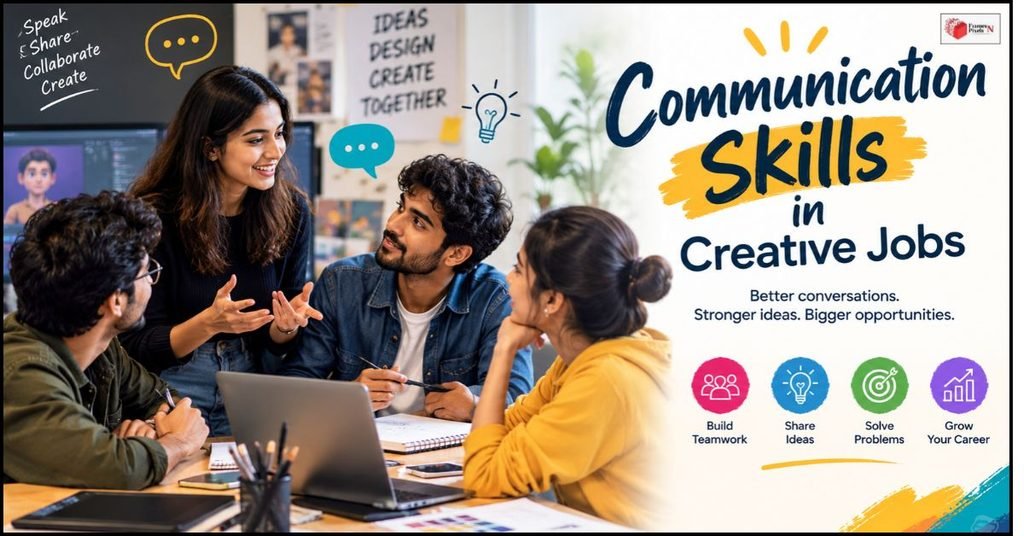
Creativity is an important part of every creative career, but having great ideas is only one part of professional success. The ability to communicate those ideas clearly, understand feedback, collaborate with others, and explain creative decisions is equally important.
Whether you want to become an animator, VFX artist, graphic designer, video editor, motion graphics designer, or UI/UX designer, communication skills can influence how effectively you work with clients, colleagues, and project teams.
In today’s digital industry, creative professionals rarely work in complete isolation. A graphic designer may collaborate with a marketing team, an animator may receive instructions from a director, and a UI/UX designer may work closely with developers. In each situation, clear communication helps transform an idea into a successful final product.
For students planning to enter the creative industry, developing communication skills alongside technical knowledge can provide a valuable professional advantage.
At Frames N Pixels, aspiring creative professionals can explore courses in animation, VFX, graphic design, motion graphics, game design, and video editing while working toward the practical abilities needed for their chosen career paths.
What Are Communication Skills in Creative Jobs?
Communication skills are the abilities that help you share information, express ideas, understand others, and work effectively with different people.
In creative professions, communication involves much more than speaking confidently. It includes listening carefully, asking relevant questions, writing professional messages, presenting concepts, receiving feedback, and explaining technical information in a clear way.
Important communication skills for creative professionals include:
- Verbal communication: Explaining ideas and discussing project requirements.
- Written communication: Writing emails, project updates, briefs, and client messages.
- Active listening: Understanding instructions, suggestions, and concerns before responding.
- Visual communication: Using images, layouts, storyboards, prototypes, and presentations to explain ideas.
- Presentation skills: Showing creative work and explaining the decisions behind it.
- Feedback management: Giving and receiving constructive suggestions.
- Team collaboration: Coordinating tasks, sharing progress, and solving problems together.
These skills help creative professionals ensure that everyone understands the project’s goals and expectations.
Why Communication Skills Matter in Creative Careers
1. They Help You Explain Creative Ideas Clearly
Creative professionals often develop ideas that are difficult to explain through words alone. A designer may imagine a particular visual style, while an animator may have a specific idea about character movement or storytelling.
Communication helps turn those ideas into something other people can understand and evaluate.
For example, a graphic designer presenting a logo concept should be able to explain why the selected colours, typography, and visual elements suit the brand. Instead of simply saying that the logo looks attractive, the designer can explain how the design reflects the brand’s personality and connects with its intended audience.
Clear explanations help clients and team members understand the reasoning behind creative decisions.
2. They Reduce Mistakes and Misunderstandings
Creative projects often involve multiple stages, revisions, and deadlines. If project requirements are unclear, professionals may spend time creating work that does not meet expectations.
Suppose a client requests a promotional video but does not specify the target audience, video duration, platform, or visual style. The editor may produce a technically excellent video that still fails to meet the client’s needs.
Asking the right questions at the beginning can prevent unnecessary revisions later.
Before starting a project, creative professionals should clarify:
- The main objective of the project.
- The target audience.
- The expected visual style and format.
- The required deliverables.
- The deadline and review process.
- The number of revisions included.
Good communication saves time and helps keep the project aligned with its goals.
3. They Improve Teamwork and Collaboration
Most professional creative projects involve people with different responsibilities. Animators, designers, editors, developers, writers, and marketing specialists may all contribute to the same project.
Each person needs to understand how their work connects with the contributions of others.
For example, a motion graphics designer may need to coordinate with a video editor to ensure that animated titles fit the editing timeline. A UI designer may need to explain design specifications to a developer so that the finished website matches the intended layout.
Clear communication helps team members share information, coordinate responsibilities, and resolve problems more efficiently.
Adobe also discusses the importance of transparent communication in creative collaboration.
4. They Help You Receive Feedback Professionally
Feedback is an essential part of the creative process. A client may request a different colour palette, a supervisor may suggest changes to an animation, or a team member may identify an issue with a design layout.
Although feedback can sometimes feel discouraging, it can help improve the quality of the final work.
Professional communication involves listening carefully, asking for clarification when necessary, and evaluating suggestions against the project’s objectives.
For example, if a client says that a poster does not feel energetic enough, the designer can ask which elements feel unsuitable. The answer may reveal that the client wants brighter colours, stronger typography, or more dynamic composition.
Understanding the reason behind the feedback makes it easier to develop an effective revision.
5. They Build Client Trust
For freelancers, designers, editors, and other creative professionals, communication plays an important role in maintaining client relationships.
Clients want to understand what is being delivered, when they can expect it, and whether the project is progressing according to plan.
Regular updates and clear explanations help clients feel informed and confident about the process.
Creative professionals can build trust by:
- Responding to messages professionally.
- Confirming project requirements before starting.
- Communicating progress honestly.
- Explaining delays as early as possible.
- Setting realistic expectations.
- Discussing changes in scope or cost clearly.
Strong communication cannot guarantee repeat business, but it can help establish more reliable and professional working relationships.
How Communication Skills Matter in Different Creative Jobs
1. Animation Careers
Animation combines storytelling, movement, design, and technical production. Depending on the project, animators may collaborate with storyboard artists, character designers, riggers, lighting artists, editors, and animation directors.
Communication helps animators understand character requirements, interpret storyboards, discuss timing, and respond to creative direction.
For example, a director may ask an animator to make a character appear nervous. The animator needs to understand the intended emotion and translate it into movement, posture, timing, and facial expressions.
Communication skills that matter:
- Understanding instructions and storyboards.
- Discussing character performance.
- Explaining animation choices.
- Sharing progress with the production team.
- Responding to feedback.
Career opportunities include 2D animator, 3D animator, character animator, storyboard artist, and animation supervisor.
2. VFX Careers
Visual effects production requires coordination between multiple specialised departments. VFX artists may work with compositors, rotoscoping artists, matchmove artists, 3D artists, editors, and supervisors.
Communication is essential because one artist’s output may become another artist’s input.
For instance, a compositor may need to clarify which elements should be included in a shot, understand the intended lighting, and communicate technical issues that affect the final image.
Communication skills that matter:
- Understanding technical briefs.
- Asking questions about unclear shots.
- Explaining production issues.
- Documenting changes and requirements.
- Coordinating with other departments.
Career opportunities include VFX artist, compositing artist, rotoscoping artist, matchmove artist, and VFX supervisor.
3. Graphic Design Careers
Graphic designers create visual content such as logos, brochures, posters, packaging, advertisements, and social media graphics.
They often work with clients, copywriters, marketing teams, and other designers. Communication helps them understand the brand’s requirements and present design solutions that support business goals.
For example, when creating a social media campaign, a designer needs to understand the campaign message, target audience, brand colours, and desired action before developing the visuals.
Communication skills that matter:
- Understanding creative briefs.
- Presenting design concepts.
- Explaining colour and typography choices.
- Discussing revisions with clients.
- Coordinating with marketing teams.
Career opportunities include graphic designer, brand designer, visual designer, advertising designer, and creative designer.
4. Video Editing Careers
Video editors organise footage, create sequences, adjust pacing, synchronise sound, and shape a final story.
They may work with directors, camera operators, producers, motion graphics designers, and clients. Communication helps editors understand the intended message and make decisions that support the project.
For example, an editor creating a student showcase video may need to understand which projects should receive the most attention, what music suits the mood, and how long the final video should be.
Communication skills that matter:
- Understanding the editing brief.
- Discussing storytelling and pacing.
- Coordinating footage and assets.
- Managing revision requests.
- Confirming final delivery specifications.
Career opportunities include video editor, assistant editor, post-production editor, social media video editor, and video production specialist.
5. Motion Graphics Careers
Motion graphics designers create animated typography, titles, infographics, transitions, promotional videos, and other animated visual content.
Their work often combines graphic design, animation, editing, and branding.
Communication is important when translating a client’s message into an effective visual sequence. Designers need to understand which information matters most and how animation can make it easier to understand.
Communication skills that matter:
- Interpreting creative briefs.
- Presenting animation concepts.
- Explaining timing and visual hierarchy.
- Coordinating with editors and designers.
- Incorporating feedback into revisions.
Career opportunities include motion graphics designer, motion designer, broadcast graphics designer, and animated content creator.
6. UI/UX and Web Design Careers
UI/UX designers create websites, mobile applications, and digital products. Their work often involves collaboration with developers, product managers, researchers, content designers, and business teams.
A designer must communicate how an interface should look, how users should interact with it, and how different elements should behave.
For example, a UI designer may need to explain button states, spacing, typography, and responsive layouts to a developer.
Communication skills that matter:
- Understanding user and business requirements.
- Presenting design prototypes.
- Explaining interface decisions.
- Discussing accessibility and usability.
- Collaborating with developers.
Career opportunities include UI designer, UX designer, web designer, product designer, and interaction designer.
Essential Communication Skills Every Creative Student Should Develop
1. Active Listening
Active listening means paying attention to the speaker, understanding the message, and asking relevant questions before responding.
Students can practise this by listening carefully during project discussions, repeating important instructions in their own words, and confirming deadlines.
2. Professional Writing
Creative professionals frequently use email, messaging platforms, project management tools, and written feedback.
Learn to write messages that are clear, polite, and direct. Include important details such as the task, deadline, required files, and next steps.
For example, instead of writing, “Please check this,” you could write, “Please review the updated poster layout and confirm whether the headline and contact details are correct.”
3. Presentation Skills
Being able to present your work helps others understand your creative decisions.
When presenting a project, explain the objective, target audience, concept, design choices, and final outcome. Use relevant examples or visual references to support your explanation.
You do not need to speak perfectly. Regular practice can help you become more confident and organised.
4. Giving and Receiving Feedback
Constructive feedback focuses on the work and provides useful suggestions.
Instead of saying, “The design looks wrong,” explain what needs improvement and why. For example, “The headline is difficult to read against the background. Increasing the contrast could improve readability.”
When receiving feedback, ask questions if a suggestion is unclear and focus on how it can improve the project.
How Students Can Improve Communication Skills During Their Course
Communication skills can be developed through regular practice. Students do not need to wait until they enter the workplace.
Here are seven practical ways to improve.
1. Participate in group projects: Work with classmates to create an animation, video, poster series, or digital campaign. Practise sharing responsibilities and discussing ideas.
2. Present your projects: Explain the purpose of your work and the decisions behind it. Ask classmates or instructors for feedback on your presentation.
3. Practise professional messages: Write clear emails and project updates. Include the relevant details and use a professional tone.
4. Ask questions: If an instruction is unclear, seek clarification before starting. Asking thoughtful questions can prevent mistakes.
5. Accept constructive criticism: Learn to evaluate feedback objectively and use it to improve your work.
6. Practise interviews: Prepare to explain your skills, portfolio, project experience, and career goals in a clear and confident way.
7. Reflect on your progress: After each project, identify what went well, where communication could improve, and what you will do differently next time.
Small, consistent efforts can help you become more comfortable communicating in professional situations.
Common Communication Mistakes Creative Professionals Should Avoid
Even talented professionals can face challenges when communication is unclear. Avoid these common mistakes:
- Starting without understanding the brief: Confirm the project objectives before beginning.
- Ignoring feedback: Listen to suggestions and clarify anything you do not understand.
- Using unclear messages: Include specific details instead of vague instructions.
- Missing important updates: Inform team members about progress, changes, and delays.
- Taking criticism personally: Focus on improving the work rather than defending every decision.
- Making unrealistic promises: Agree to deadlines that you can reasonably meet.
- Failing to document changes: Keep important decisions and revised requirements accessible to the team.
Professional communication is not about using complicated words. It is about helping people understand information and work together effectively.
How Frames N Pixels Can Help You Prepare for Creative Careers
Building a creative career involves more than learning software. Students also need to practise presenting ideas, understanding project requirements, collaborating with others, and explaining their work.
Frames N Pixels offers learning pathways in creative fields such as animation, VFX, graphic design, motion graphics, game design, and video editing.
As you explore these fields, look for opportunities to develop both technical and professional skills through practical assignments, project presentations, portfolio development, and collaborative activities.
Before selecting a course, consider the curriculum, hands-on training, faculty experience, student projects, and available career guidance. Choose a learning pathway that aligns with your interests and long-term goals.
To learn more about the available courses and training opportunities, visit the official Frames N Pixels website:
Website: https://www.framesnpixels.com/
Frequently Asked Questions (FAQs)
1. Why are communication skills important in creative jobs?
Communication skills help creative professionals explain ideas, understand project requirements, receive feedback, collaborate with teams, and maintain professional relationships. They help ensure that creative work meets the project’s objectives.
2. Are communication skills necessary for animation students?
Yes. Animators need to understand instructions, discuss character performance, interpret storyboards, and coordinate with other production departments. Clear communication helps them contribute effectively to collaborative projects.
3. How do communication skills help graphic designers?
Communication helps graphic designers understand client expectations, explain design concepts, discuss revisions, and collaborate with marketing or development teams. It also helps them present the reasoning behind their creative decisions.
4. Can introverts succeed in creative careers?
Absolutely. Communication is not limited to speaking frequently or being outgoing. Listening carefully, writing clear messages, asking questions, presenting work thoughtfully, and completing tasks reliably are all valuable communication skills.
5. How can students improve their communication skills?
Students can practise presentations, participate in group projects, write professional emails, ask questions, seek feedback, and prepare for interviews. Regular practice helps build confidence and clarity.
External Resources to Learn More
Explore these resources for further guidance on communication and professional development:
- Adobe – How to Foster Great Creative Collaborations: https://blog.adobe.com/en/publish/2024/02/21/how-to-foster-great-creative-collaborations
- National Careers Service – Develop Your Soft Skills: https://nationalcareers.service.gov.uk/careers-advice/how-to-develop-your-soft-skills
- Prospects – How to Get a Creative Job: https://www.prospects.ac.uk/jobs-and-work-experience/job-sectors/creative-arts-and-design/how-to-get-a-creative-job/
- National Careers Service – Animator Career Profile: https://nationalcareers.service.gov.uk/job-profiles/animator
These resources offer useful insights into communication, teamwork, creative career preparation, and the skills professionals use in the workplace.
Follow Frames N Pixels on Social Media
Stay connected with Frames N Pixels for creative inspiration, course updates, student activities, and industry-related content.
- Website: https://www.arenavirar.com/arena-animation-vfx-animation-course/
- Instagram: https://www.instagram.com/arenaanimation_mv/
- Facebook:https://www.facebook.com/people/Arena-Animation-Mira-Road-Virar/61559584420604/
- LinkedIn: https://www.linkedin.com/in/arena-animation-mira-road-virar-66078a1b2/
- YouTube: https://www.youtube.com/@arenaanimationvirar4423
Follow our social media channels to discover creative learning opportunities, explore student work, and stay connected with the Frames N Pixels community.
Closing Thought
Creativity helps you imagine new possibilities, but communication helps you bring those possibilities to life. Whether you choose animation, VFX, graphic design, video editing, motion graphics, or UI/UX design, the ability to express ideas clearly and collaborate with others can make a meaningful difference throughout your career.
You do not need to be a perfect speaker to become a successful creative professional. Start by listening carefully, asking the right questions, explaining your ideas, and learning from feedback. With consistent practice, these small habits can become valuable professional strengths.