
Discover the Journey of Animation from 2D to 3D
Introductions
Animation has transformed the way people experience entertainment, storytelling, advertising, education, and digital media. From simple hand-drawn cartoons to visually impressive 3D characters and computer-generated worlds, animation has continuously evolved with creativity and technology.
In its early days, animation required artists to draw individual frames by hand to create the illusion of movement. Today, animators use advanced digital tools to design characters, build realistic environments, create visual effects, and bring imaginative ideas to life.
One of the biggest transformations in this industry has been the development of 3D animation from traditional 2D techniques. However, this evolution does not mean that 2D animation has disappeared. Both styles continue to play important roles in films, television, gaming, advertising, and digital content.
In this blog, we will explore the history of animation, how it developed from 2D to 3D, the technologies behind this transformation, and the career opportunities available in the animation industry.
1. The Beginning of Animation: Where It All Started
The history of animation began long before computers became part of the creative industry. Early inventors and artists experimented with optical devices that created the illusion of movement by displaying a sequence of images.
Some early animation-related inventions included:
- Thaumatrope: A simple optical toy that combined two images into one when rotated quickly.
- Phenakistoscope: A spinning disc with drawings that appeared to move when viewed through its slots.
- Zoetrope: A rotating cylinder that displayed a sequence of images to create the illusion of motion.
- Flipbook: A collection of drawings that appear animated when the pages are flipped rapidly.
These inventions helped establish the basic concept behind animation: a series of slightly different images can create the illusion of continuous movement.
As filmmaking developed, animation became an important form of visual storytelling. Artists began creating animated characters, short films, and eventually full-length animated productions.
2. The Golden Age of Traditional 2D Animation
Traditional 2D animation became one of the most popular forms of animated entertainment during the early and middle parts of the 20th century.
In this technique, artists create characters and backgrounds using two-dimensional drawings. Each frame contains a slightly different pose or movement. When the frames are played in sequence, the character appears to move.
During this period, animation studios developed more advanced production methods, including storyboarding, character design, background painting, and cel animation.
A major milestone was the release of Snow White and the Seven Dwarfs in 1937, which demonstrated the potential of feature-length animated storytelling.
Traditional 2D animation became widely recognised for:
- Expressive character movements.
- Creative visual storytelling.
- Hand-drawn illustrations.
- Colourful backgrounds and environments.
- Unique artistic styles.
Even today, the charm of traditional animation continues to influence artists and filmmakers.
3. The Rise of Digital Animation
As computers became more powerful, animation production gradually started moving towards digital workflows.
Earlier, artists had to complete many production steps manually. Digital tools made it possible to draw, colour, edit, organise, and animate artwork using computer software.
Computer-assisted animation introduced new possibilities, such as:
- Digital drawing and painting.
- Easier frame management.
- Computer-generated camera movements.
- Digital compositing.
- Faster editing and revisions.
- Integration of animation with visual effects.
The introduction of digital production tools did not remove the importance of traditional animation skills. Instead, it gave artists new ways to apply those skills.
For example, digital 2D animation still uses drawing, timing, character expressions, and movement principles. The main difference is that artists can now complete much of the work using software rather than paper and traditional painting materials.
4. The Development of 3D Animation
The development of computer-generated imagery (CGI) introduced a new dimension to animation.
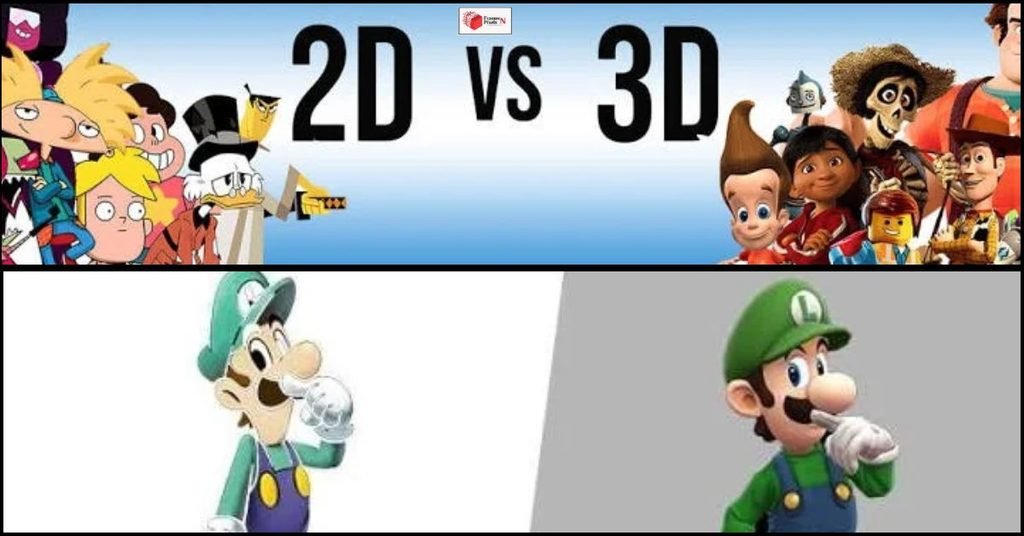
Unlike 2D animation, which uses height and width, 3D animation works with height, width, and depth. Artists create digital objects and characters that can be viewed and animated from different angles.
A major milestone in this journey was the release of Toy Story in 1995. Produced by Pixar, it became the first feature-length film created entirely using computer-generated 3D animation.
This achievement helped demonstrate the possibilities of computer animation in feature filmmaking and influenced the future direction of the industry.
Today, 3D animation is widely used in:
- Animated films and television series.
- Video games.
- Product advertisements.
- Architecture and interior visualisation.
- Educational content.
- Virtual production.
- Simulation and visual effects.
Why Choose Frames N Pixels to Explore Creative Skills?
The evolution of animation has created opportunities for people who enjoy drawing, designing, storytelling, and working with digital technology.
At Frames N Pixels, students can explore creative learning areas such as:
- 2D and 3D Animation
- Visual Effects (VFX)
- Graphic Design
- Motion Graphics
- Video Editing
- Game Design
Learning these creative skills through practical projects can help students understand different areas of digital media production and develop work for their portfolios.
Whether you are interested in traditional character animation, 3D modelling, gaming, or visual effects, building a strong foundation is an important first step towards exploring a creative career.
Visit the Frames N Pixels official website to explore courses and learning opportunities.
External Resources to Learn More About Animation
Explore these useful resources for additional information, software learning, and creative inspiration:
- Pixar Animation Studios – Explore animated films, creative storytelling, and animation projects.
- Blender – Learn about an open-source 3D creation tool used for modelling, animation, and rendering.
- Autodesk Maya – Explore professional 3D modelling, animation, and visual effects software.
- Adobe Animate – Discover tools for creating 2D animation and interactive content.
- Toon Boom – Explore professional 2D animation and storyboarding tools.
- Animation Mentor – Explore animation education and professional learning resources.
Frequently Asked Questions (FAQs)
1. What is the evolution of animation?
The evolution of animation refers to the development of animation techniques from early optical toys and hand-drawn images to digital 2D animation, 3D computer animation, and modern interactive technologies.
2. What is the difference between 2D and 3D animation?
2D animation uses height and width to create flat images and movement, while 3D animation adds depth, allowing characters and objects to be viewed and animated in a three-dimensional environment.
3. When did 3D animation become popular?
Computer animation developed over several decades. The release of Toy Story in 1995, the first feature-length film created entirely using computer-generated 3D animation, was a major milestone in its growth.
4. Is 2D animation still used today?
Yes. 2D animation is still used in cartoons, advertisements, explainer videos, games, educational content, and digital media projects.
5. Which is better: 2D or 3D animation?
Neither is universally better. 2D is suitable for many illustrative and graphic styles, while 3D is useful when projects require depth, dimensional models, and flexible camera movement.
6. What are the main stages of 3D animation?
The main stages generally include modelling, texturing, rigging, animation, lighting, rendering, and compositing.
Connect with Frames N Pixels
Stay connected with Frames N Pixels for updates on animation, VFX, graphic design, student projects, creative courses, and digital media.
- Website:https://www.arenavirar.com/graphic-design-courses-in-mira-road-creativity-for-careers/
- Instagram:https://www.instagram.com/arenaanimation_mv/
- Facebook:https://www.facebook.com/people/Arena-Animation-Mira-Road-Virar/61559584420604/
- LinkedIn: https://www.linkedin.com/in/arena-animation-mira-road-virar-66078a1b2/
- YouTube: https://www.youtube.com/@arenaanimationvirar4424
Follow us to explore creative projects, learn about industry skills, and stay updated with opportunities in the digital creative field.
Closing Thought
The journey of animation from 2D drawings to 3D digital worlds shows how creativity and technology can work together to transform storytelling. While tools and production methods have changed, the basic purpose of animation remains the same: to bring ideas, characters, and imagination to life.
Today, both 2D and 3D animation offer exciting possibilities across films, gaming, advertising, education, and digital media. For aspiring creative professionals, understanding both techniques can open the door to new ideas and learning opportunities.