
Master the Skills That Set Great Designers Apart
Introductions
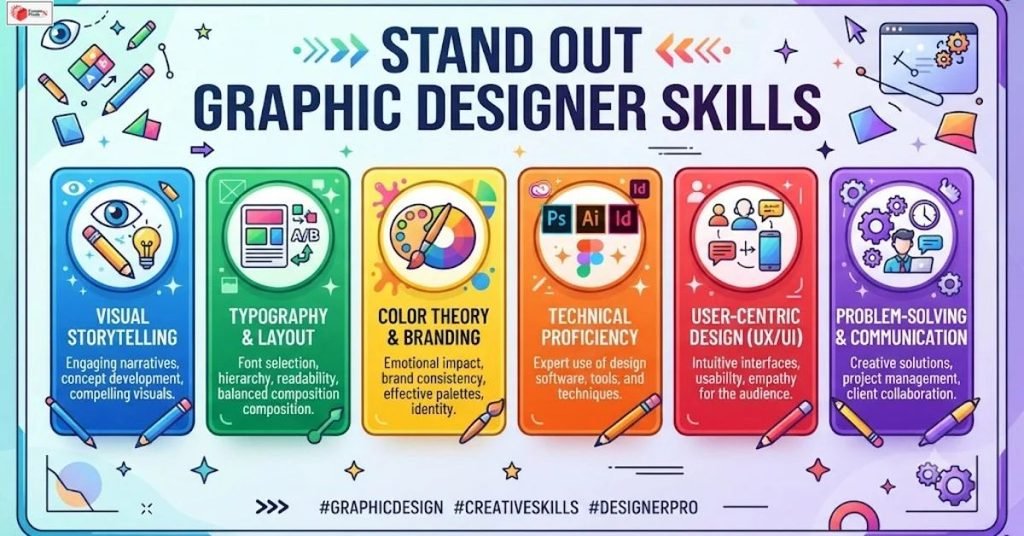
Graphic design is more than creating attractive visuals. It is about communicating ideas, solving problems, building brands, and capturing attention through creative design. In today’s digital world, businesses need graphic designers for social media, advertising, websites, packaging, branding, marketing campaigns, and many other platforms.
But with so many designers entering the creative industry, what makes one graphic designer stand out from the rest?
The answer is not just knowing Photoshop or Illustrator. A successful graphic designer combines creativity, technical knowledge, visual communication, problem-solving, originality, and the ability to understand the needs of a client or audience.
Whether you are a beginner, a design student, or someone planning to build a creative career, developing the right skills can help you become a more confident and capable graphic designer.
Let’s explore the important skills that make graphic designers stand out in today’s competitive creative industry.
1. Strong Understanding of Design Fundamentals
The first skill that makes a graphic designer stand out is a strong understanding of design fundamentals. Software can help you create visuals, but design principles help you decide how those visuals should look and communicate.
Module 2: Core Principles of Visual Hierarchy | Design Principles Course
11 Important Graphic Design Skills Employers Want From a Designer | Shillington Education
Important design fundamentals include:
- Balance: Arranging elements so the design feels visually stable.
- Contrast: Creating differences in colour, size, shape, or typography to highlight important information.
- Alignment: Organising elements in a structured and professional way.
- Hierarchy: Directing the viewer’s attention to the most important information first.
- Spacing: Using space effectively to avoid clutter and improve readability.
- Composition: Arranging visual elements to create a clear and attractive design.
When designers understand these principles, they can create visuals that look professional and communicate effectively rather than simply filling a page with elements.
2. Creativity and Original Thinking
Creativity is one of the most valuable qualities of a graphic designer. Clients and brands often want designs that communicate their message while capturing attention in a fresh and memorable way.
What is brand identity? A complete guide for marketers – Palmador Blog
How to Create a Brand Strategy from Scratch — ONE Agency Blog
Unlocking the Secrets to Unforgettable Logo Design 5 Key Elements You Need to Know
A creative designer does not always follow the first idea that comes to mind. They explore different possibilities, experiment with layouts, colours, shapes, imagery, and typography before deciding on the final concept.
Original thinking helps designers:
- Develop unique concepts for campaigns.
- Create memorable visual identities.
- Present information in engaging ways.
- Avoid repetitive and generic designs.
- Adapt ideas to different audiences and industries.
Creativity can be developed through regular practice, observing the world around you, studying design references, exploring different styles, and experimenting with new ideas.
3. Typography That Communicates Clearly
Typography is much more than choosing a stylish font. It plays an important role in making designs readable, attractive, and professional.
Poster Design Iterations :: Behance
LL Unica 77 – Type + Layout Explorations by Filip Felbar on Dribbble
A graphic designer who understands typography knows how to choose fonts, combine typefaces, control spacing, and create a clear hierarchy between headlines, subheadings, and body text.
Good typography skills include:
- Font selection
- Font pairing
- Letter spacing
- Line spacing
- Text alignment
- Font hierarchy
- Readability across different sizes
For example, a social media advertisement should communicate its main message quickly. A strong headline, suitable font, and clear supporting text can help viewers understand the design at a glance.
Typography mistakes such as using too many fonts, poor spacing, or low readability can make even a visually attractive design appear unprofessional.
4. Colour Theory and Emotional Understanding
Colour can influence how people feel about a design and how they perceive a brand. Designers who understand colour theory can make better decisions about colour combinations, contrast, mood, and visual identity.
Colors for Branding: How to Use Color Psychology to Elevate Your Brand Identity – Brandguide
Warm vs. Cool Colors in Graphic Design: How to Use Them Effectively – Zeka Design
A graphic designer should understand:
- Primary, secondary, and tertiary colours
- Complementary colour combinations
- Warm and cool colours
- Colour harmony
- Colour contrast
- Brand colour consistency
- Colour psychology in visual communication
For example, a luxury brand may use a minimal colour palette to communicate sophistication, while a children’s campaign may use bright and energetic colours to create excitement.
The right colour choices help designers communicate the intended message more effectively.
5. Mastering Professional Design Software
A graphic designer’s ideas become real visual projects through the use of professional design tools. Learning software properly helps designers work efficiently, experiment creatively, and produce polished outputs.
Must-Have Software for Freelance Graphic Designers in 2026
How to Get Photoshop and Any Other Adobe Creative Suite Tool Fast (Safely)
How to Use Adobe Creative Cloud for Graphic Design
External Resources for Graphic Designers
Explore these useful resources to learn more about design principles, software, and creative career development.
- Adobe Graphic Design Resources – Explore graphic design concepts, techniques, and creative inspiration.
- Adobe Photoshop – Learn about image editing and digital design.
- Adobe Illustrator – Explore vector graphics, illustration, and logo creation.
- Behance – Discover portfolios and creative projects from designers worldwide.
- Canva Design School – Explore design learning resources and creative tutorials.
- Coursera Graphic Design Courses – Explore graphic design learning programmes and courses.
Frequently Asked Questions (FAQs)
1. What skills make a graphic designer stand out?
Creativity, typography, colour theory, layout design, software knowledge, communication, problem-solving, adaptability, attention to detail, and portfolio quality help graphic designers stand out.
2. Is creativity enough to become a graphic designer?
Creativity is important, but graphic designers also need technical skills, knowledge of design principles, communication abilities, and the ability to understand project requirements.
3. Which software should a graphic designer learn?
Beginners can start with Adobe Photoshop and Illustrator. Depending on their career interests, they can also explore InDesign, Canva, Figma, and other creative applications.
4. Why is typography important in graphic design?
Typography helps communicate messages clearly, creates visual hierarchy, improves readability, and contributes to the overall style and personality of a design.
5. How does colour theory help graphic designers?
Colour theory helps designers select suitable colour combinations, create visual contrast, communicate emotions, and maintain consistency in branding and marketing visuals.
Connect with Frames N Pixels
Follow Frames N Pixels for creative inspiration, student projects, course updates, design tips, and opportunities to explore the digital creative industry.
Creating Effective Event Banners: A Step-by-Step Guide – Printbox London (Same Day Printing London)
Frames N Pixels
Learn. Create. Design. Build your creative future.
- 🌐 Website:https://www.arenavirar.com/arena-animation-vfx-animation-course/
- 📸 Instagram: https://www.instagram.com/arenaanimation_mv/
- 👍 Facebook: https://www.facebook.com/people/Arena-Animation-Mira-Road-Virar/61559584420604/
- 💼 LinkedIn: https://www.linkedin.com/in/arena-animation-mira-road-virar-66078a1b2/
- ▶️ YouTube: https://www.youtube.com/@arenaanimationvirar4423
Closing Thought
Graphic design is a field where creativity meets communication. While software can help you create visuals, it is your ideas, understanding of design principles, attention to detail, and ability to solve problems that make your work meaningful.
Every designer begins somewhere—with a simple poster, a logo experiment, a social media creative, or a small personal project. With practice, learning, and patience, those small projects can become the foundation of a professional portfolio and a creative career.