Why Observation Is a Core Skill for Animators
Introduction
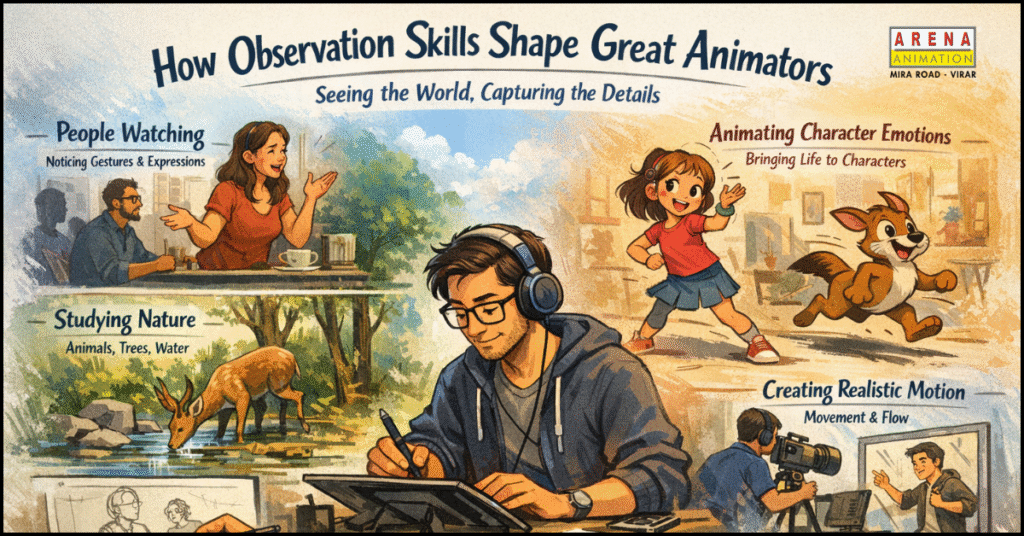
Behind every believable animated character lies a powerful skill that goes beyond software and tools—observation. Great animators don’t just animate; they watch, analyze, and understand life. From subtle facial expressions to body language and timing, observation is what turns animation from movement into emotion.
Why Observation Is the Animator’s Strongest Tool
Animation is not about copying reality—it’s about interpreting it. Observation helps animators:
- Capture natural movements
- Understand emotions and reactions
- Create relatable characters
- Improve timing and weight
- Tell stories visually
Without observation, animation feels mechanical. With it, animation feels alive.
What Animators Learn Through Observation
1. Human Movement
Walking styles, posture, gestures, and balance differ from person to person. Observing these details helps animators create realistic and varied characters.
2. Facial Expressions & Emotions
A raised eyebrow, a pause before a smile, or a slight head tilt can express more than dialogue. Observation teaches animators emotional storytelling.
3. Timing & Rhythm
Real-life actions have pauses, anticipation, and follow-through. Observing timing helps animators avoid robotic motion.
4. Acting & Performance
Great animation often reflects strong acting principles—something studios like Pixar and Walt Disney Animation Studios emphasize deeply.
How Observation Improves Animation Quality
When animators observe carefully, they:
- Animate with intention
- Make scenes more immersive
- Reduce over-animation
- Enhance storytelling impact
Observation bridges the gap between technical skill and emotional connection.
External Insight: Observation in Animation
Industry professionals consistently highlight observation as a core animation skill.
🔗 External reference (Animation principles & observation – Animation Mentor Blog):
https://www.animationmentor.com/blog/why-observation-is-key-to-animation/
(This article explains how observing real life improves animation performance and realism.)
Frequently Asked Questions (Q&A)
Q1: Can observation skills be learned?
Yes. Observation improves with practice, awareness, and conscious study of real-life behavior.
Q2: How can beginners improve observation skills?
By watching people, recording reference videos, studying films, and sketching movements regularly.
Q3: Is observation more important than software knowledge?
Yes. Software changes, but observation remains a timeless animation skill.
Q4: Do professional animators still observe real life?
Absolutely. Observation is a lifelong habit for great animators.
Why Observation Separates Good Animators from Great Ones
Anyone can learn tools. Not everyone learns to see. Observation allows animators to:
- Think like actors
- Animate with purpose
- Create characters audiences believe in
It’s the difference between motion and meaning.
Closing Thought: Learn to See Before You Animate
When animators learn to truly see the world around them, their work becomes expressive, believable, and unforgettable.
Observe deeply. Animate thoughtfully. Let life guide your creativity.
Follow & Get Inspired on Social Media
Stay connected with animation tips, industry insights, and creative inspiration:
- 📘 Facebook: https://www.facebook.com/people/Arena-Animation-Mira-Road-Virar/61559584420604/
- 📸 Instagram: https://www.instagram.com/arenaanimation_mv/
- ▶️ YouTube: https://www.youtube.com/@arenaanimationvirar4426
- 💼 LinkedIn: https://www.linkedin.com/in/arena-animation-mira-road-virar-66078a1b2/