
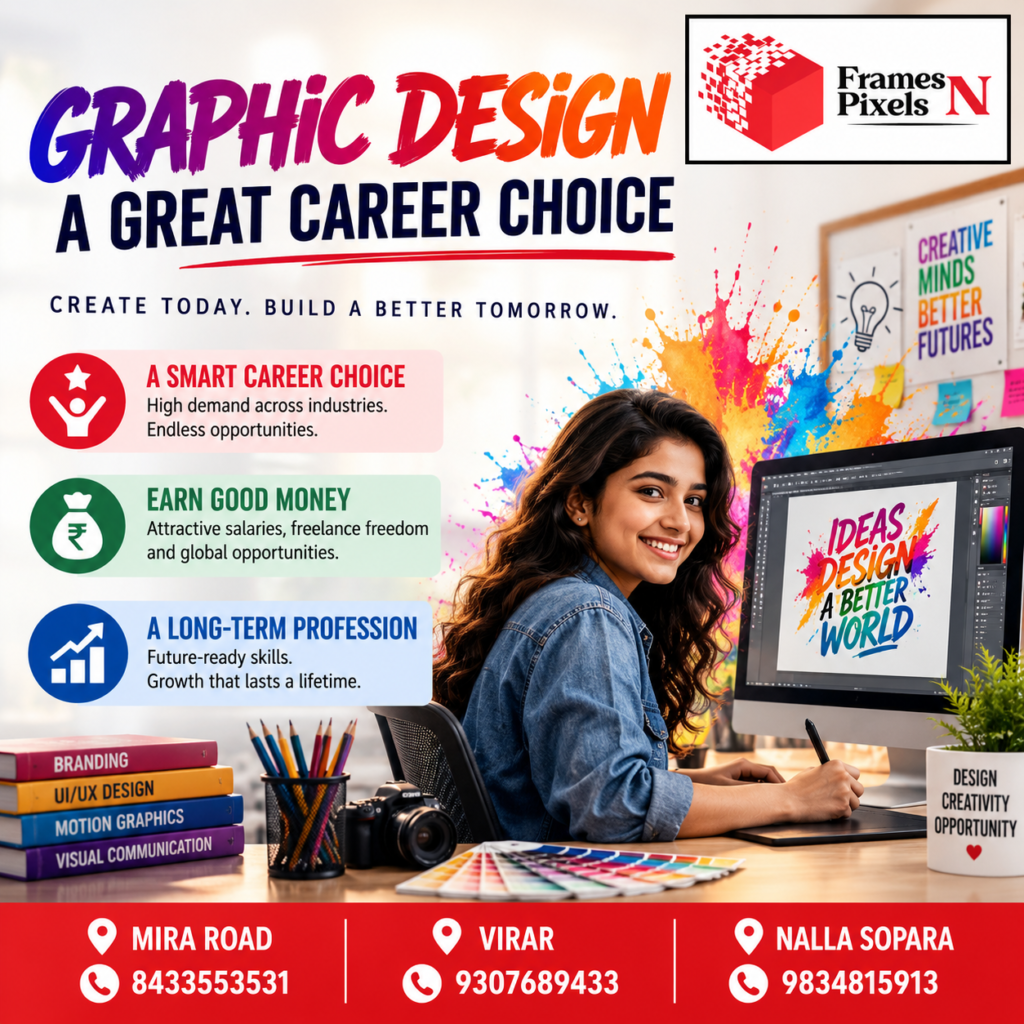
Why Graphic Design Is One of the Smartest Career Choices for Creative Students
Meta Title: Is Graphic Design a Good Career in 2026? | Career Guide for Students
Meta Description: Wondering if Graphic Design is a good career in 2026? Discover career opportunities, salaries, AI’s impact, industry demand, and why Graphic Design is a future-ready profession.
Is Graphic Design a Good Career in 2026?
Choosing a career after Class 12 can feel overwhelming. Many students and parents wonder whether traditional careers such as engineering or medicine are the only safe options. However, the world of work has changed dramatically over the last decade.
Today, businesses compete not only through better products but also through better design, branding, and digital experiences. Whether you open a mobile app, scroll through Instagram, visit a website, or walk through a supermarket, almost everything you see has been created by a graphic designer.
This raises an important question:
Is Graphic Design a good career in 2026?
The answer is yes—provided you are creative, willing to learn, and interested in combining art with technology.
Design Is Everywhere
Look around you for a moment.
The logo on your favourite sports shoes.
The packaging of a chocolate bar.
A restaurant menu.
A YouTube thumbnail.
A mobile app.
An online advertisement.
Even your school textbook.
Every one of these has been designed by a graphic designer.
In today’s digital world, businesses communicate visually before they communicate through words. Good design helps companies attract customers, build trust, and stand out from competitors.
That means graphic designers are needed in almost every industry.
Every Industry Needs Graphic Designers
Many people think graphic designers work only in advertising agencies.
In reality, opportunities exist across a wide range of industries:
- Advertising
- Digital Marketing
- Social Media
- E-commerce
- Education
- Healthcare
- Fashion
- Real Estate
- Hospitality
- Manufacturing
- Publishing
- Entertainment
- Gaming
- Architecture
Whether it is a multinational company or a small local business, everyone needs visual communication.
This creates a steady demand for skilled designers.
The Digital Economy Is Creating New Opportunities
Businesses are investing more in digital platforms than ever before.
Every company needs:
- Social media posts
- Website banners
- Product packaging
- Brand identities
- Digital advertisements
- Marketing brochures
- Presentation designs
- Infographics
- Motion graphics
- User interface designs
As more businesses move online, the need for creative professionals continues to grow.
AI Is Changing Graphic Design—Not Replacing Designers
One of the biggest concerns among students today is Artificial Intelligence.
Many ask,
“Will AI replace graphic designers?”
AI can generate images, remove backgrounds, suggest layouts, and speed up repetitive tasks.
However, AI cannot understand a client’s business goals, develop a unique brand identity, or make creative decisions that connect with people emotionally.
Imagine asking AI to design the identity for a new children’s hospital. It may produce attractive visuals, but it cannot fully understand the emotions, trust, warmth, and cultural nuances that influence design choices.
A skilled designer combines creativity, psychology, communication, and strategy—qualities that AI cannot replicate.
The future belongs to designers who know how to use AI as a creative assistant rather than see it as a competitor.
Creativity Is Becoming One of the Most Valuable Skills
Technology changes quickly, but creativity remains timeless.
According to the World Economic Forum’s Future of Jobs Report, creative thinking is among the most valuable skills employers will seek in the coming years.
Graphic design develops exactly these abilities:
- Creativity
- Problem-solving
- Visual communication
- Design thinking
- Collaboration
- Adaptability
These skills are useful not only in design but across many professions.
More Than Just Designing Posters
Modern graphic design includes much more than creating posters or logos.
Today’s designers work in exciting fields such as:
- Brand Identity Design
- Packaging Design
- UI/UX Design
- Social Media Design
- Motion Graphics
- Digital Illustration
- Publication Design
- Advertising Design
- Infographic Design
- AI-assisted Content Creation
This variety allows professionals to specialize according to their interests.
Skills Matter More Than Marks
One of the biggest advantages of graphic design is that employers usually evaluate your portfolio more than your academic marks.
If you can demonstrate creativity through real projects, employers are more interested in what you can create than the percentage you scored in your board examinations.
A strong portfolio often speaks louder than a résumé.
Opportunities Beyond Jobs
Graphic design is one of the few careers where you don’t have to depend only on traditional employment.
Many designers choose to:
- Work as freelancers
- Build personal brands
- Start design studios
- Create online courses
- Sell digital products
- Work remotely for international clients
- Launch creative agencies
The creator economy has made it possible for talented designers to earn income from anywhere in the world.
Is Graphic Design Right for You?
Graphic Design may be an excellent career if you:
- Enjoy creativity.
- Like drawing or visual storytelling.
- Notice colours, layouts, and branding.
- Enjoy working with technology.
- Love solving creative challenges.
- Want practical, skill-based learning.
- Like bringing ideas to life.
You don’t need to be a brilliant artist from day one. Most professional designers develop their skills through practice, guidance, and continuous learning.
What Should Students Learn?
A modern graphic designer should understand:
- Design principles
- Typography
- Colour theory
- Branding
- Photoshop
- Illustrator
- InDesign
- Figma
- Motion Graphics
- AI-powered design tools
The best professionals combine artistic creativity with technical expertise.
Advice for Parents
Parents often look for careers that offer stability, growth, and long-term opportunities.
Graphic design meets these expectations because every business, organization, and institution needs effective visual communication.
As companies continue investing in branding, digital marketing, e-commerce, and online education, demand for skilled designers is expected to remain strong.
Instead of asking, “Will there be jobs?” a better question is:
“Will businesses ever stop needing good design?”
The answer is almost certainly no.
Summary
Graphic Design is no longer just about creating attractive images. It is about solving problems, building brands, communicating ideas, and shaping how people experience the world around them.
As technology, AI, and digital media continue to evolve, the demand for creative professionals who can think strategically and communicate visually is only expected to grow.
For students who enjoy creativity, technology, and continuous learning, Graphic Design is one of the most exciting and future-ready career choices in 2026.
The most successful designers of tomorrow will not simply know how to use software. They will understand people, tell compelling stories, solve business problems, and use technology to bring ideas to life.
References
- World Economic Forum. The Future of Jobs Report 2025 – Identifies creative thinking among the most valuable skills for the future workforce.
- FICCI–EY. Stories, Scale and Impact: Unlocking India’s Media & Entertainment Economy (2026) – Highlights the continued growth of digital media, advertising, and creative industries.
- Ministry of Information & Broadcasting, Government of India. Realising AVGC-XR Sector Potential in India (2022) – Recognizes creative digital industries as major drivers of future employment.
- Adobe. Future Workforce and Creative Trends Reports – Highlights the increasing importance of digital creativity and design skills in modern workplaces.