
Feedback Shapes Better Creative Skills & Career Growth
Introductions
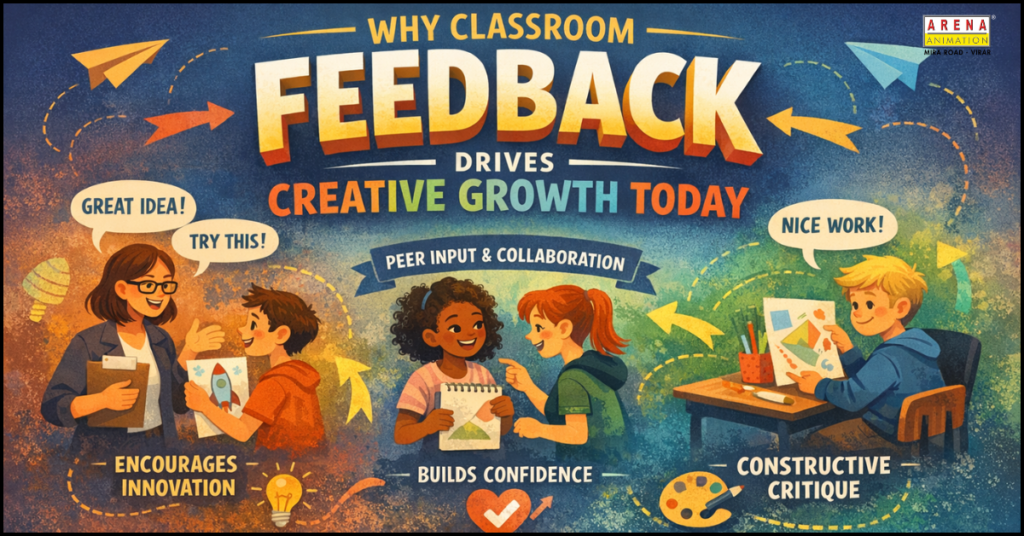
Creativity doesn’t grow in isolation—it grows through feedback, refinement, and iteration. Whether you’re a graphic designer, animator, VFX artist, or UI/UX learner, one of the most powerful tools for improvement is classroom feedback.
In structured creative learning environments like Arena Animation, feedback plays a central role in shaping students into confident, industry-ready professionals.
What Is Classroom Feedback in Creative Learning?
Classroom feedback is the process where mentors and peers review your work and provide:
- Suggestions for improvement
- Technical corrections
- Creative insights
- Alternative approaches
- Encouragement and direction
Unlike exams, creative learning thrives on continuous improvement, and feedback is the driving force behind it.
Why Feedback Is Essential for Creative Growth
1️⃣ Helps Identify Strengths & Weaknesses
Many beginners are unsure about what they’re doing right or wrong. Feedback helps:
- Highlight strong areas
- Identify mistakes early
- Guide improvement
This clarity speeds up learning and prevents bad habits.
2️⃣ Encourages Creative Exploration
Good feedback doesn’t limit creativity—it expands it.
Mentors often suggest:
- New design approaches
- Different storytelling techniques
- Alternative compositions
This pushes students to think beyond their first idea and explore better solutions.
3️⃣ Builds Professional Mindset
In the real world, creatives constantly receive feedback from:
- Clients
- Team members
- Creative directors
Learning to accept and apply feedback in the classroom prepares students for professional environments.
4️⃣ Improves Quality Through Iteration
Creative work improves through multiple versions. Feedback helps refine:
- Design layouts
- Animation timing
- Visual storytelling
- User experience
Each revision brings the work closer to professional standards.
5️⃣ Boosts Confidence Over Time
Constructive feedback helps students:
- Understand their progress
- Gain confidence in their skills
- Present ideas more effectively
Instead of fear of criticism, students develop a mindset of growth.
Real-World Relevance of Feedback
In creative industries, feedback is part of daily workflow. Companies rely on review cycles to improve quality and ensure projects meet expectations.
According to insights from
👉 https://www.nngroup.com/articles/ux-feedback/
continuous feedback improves both design quality and user experience outcomes.
How Structured Training Uses Feedback Effectively
At Arena Animation, feedback is integrated into learning through:
✔ Regular project reviews
✔ One-on-one mentor guidance
✔ Group critiques
✔ Portfolio evaluation sessions
✔ Real-world assignment corrections
Students don’t just submit work—they improve it step by step.
Frequently Asked Questions (FAQs)
Q1: Why is feedback important in creative learning?
Because it helps identify mistakes, improve quality, and develop better creative thinking.
Q2: Can feedback sometimes reduce creativity?
No. Constructive feedback enhances creativity by encouraging new ideas and perspectives.
Q3: How should students handle criticism?
By viewing it as an opportunity to learn and improve, not as a negative judgment.
Q4: Is peer feedback useful?
Yes. Different perspectives from classmates can provide valuable insights.
Q5: How does Arena Animation use feedback in training?
Through continuous mentor reviews, project corrections, and portfolio guidance.
Connect With Arena Animation
Stay updated with creative learning tips and student projects:
🌐 Website: https://www.arenavirar.com/arena-animation-vfx-animation-course/
📸 Instagram: https://www.instagram.com/arenaanimation_mv//
📘 Facebook: https://www.facebook.com/people/Arena-Animation-Mira-Road-Virar/61559584420604/
💼 LinkedIn: https://www.linkedin.com/in/arena-animation-mira-road-virar-66078a1b2/
Closing Thought
Feedback transforms ideas into polished work and learners into professionals.
In a supportive learning environment, feedback becomes a powerful tool for growth, confidence, and success. Because in creative careers, progress doesn’t happen alone—it happens through guidance, refinement, and continuous learning.