
Remote Jobs for Graphic Designers: Career Opportunities, Skills & Tips
Discover remote job opportunities for graphic designers, the skills you need, where to find international clients, and how to build a successful career working from anywhere.
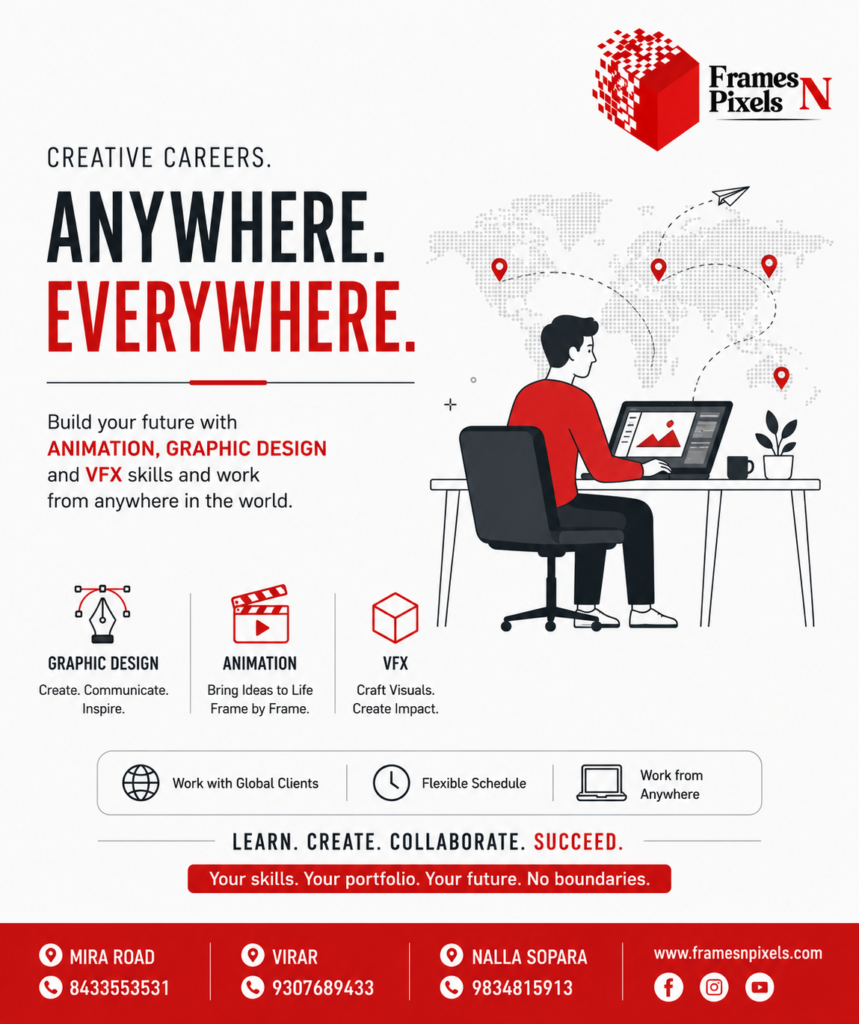
Remote Jobs for Graphic Designers: A New Way to Build Your Career
Imagine starting your workday without spending two hours travelling through traffic. Instead, you open your laptop, connect with your team online, and begin working on a design project for a client in another city—or even another country.
For many graphic designers, this is no longer a dream. Remote work has become a practical career option.
The growth of digital marketing, social media, e-commerce, online education, and content creation has created a huge demand for visual communication. Companies need designers to create everything from social media posts and advertisements to websites, presentations, packaging, and brand identities.
The best part? Much of this work can be done remotely.
What Does a Remote Graphic Designer Do?
A remote graphic designer performs many of the same tasks as a designer working in an office. The difference is that communication and collaboration happen digitally.
A remote designer may work on:
- Social media graphics
- Logo and brand identity
- Digital advertisements
- Website graphics
- UI design elements
- YouTube thumbnails
- Presentation design
- Brochures and marketing materials
- Packaging design
- Infographics
- Motion graphics
- Email campaigns
- E-commerce creatives
Depending on the client, a designer may work on one-off projects or become part of a company’s remote creative team.
Why Are Remote Graphic Design Jobs Growing?
Businesses today operate in a digital-first environment.
A small business may need Instagram content. An online store needs product banners. A startup needs a brand identity. A YouTube creator needs thumbnails and channel graphics.
Even companies with no physical office can have a global customer base.
This has increased the need for designers who can work remotely and collaborate using digital tools.
The rise of social media and digital marketing has also created a continuous demand for fresh visual content.
Full-Time Remote Jobs vs Freelancing
There are two main ways graphic designers can work remotely.
1. Remote Full-Time Employment
A designer works as a regular employee but performs their job from home or another location.
The company may provide:
- Fixed salary
- Regular working hours
- Paid leave
- Employee benefits
- Long-term career growth
This option can provide greater stability and a predictable income.
2. Freelancing
Freelancers work independently and take projects from multiple clients.
They can choose:
- Which projects to accept
- How much to charge
- Where to work
- When to work
However, freelancers must also manage client communication, payments, marketing, and finding new projects.
Both paths can lead to successful careers. The right choice depends on your personality, financial goals, and preferred working style.
Can Graphic Designers Work for International Clients?
Yes.
One of the biggest advantages of remote work is access to a global market.
A skilled designer in India can work with clients in:
- The United States
- United Kingdom
- Canada
- Australia
- Europe
- The Middle East
- Southeast Asia
A designer’s location is often less important than the quality of their work, communication, reliability, and ability to meet deadlines.
International clients may also provide opportunities to earn in foreign currencies, although income varies significantly depending on experience, specialization, portfolio quality, and client relationships.
What Skills Do Remote Graphic Designers Need?
Being good at design is essential, but remote work requires additional skills.
Design Skills
A designer should understand:
- Typography
- Colour theory
- Composition
- Layout
- Branding
- Visual hierarchy
Software Skills
Knowledge of tools such as Photoshop, Illustrator, InDesign, Figma, and other design applications can be valuable depending on the type of work.
Communication
Remote designers need to communicate clearly through email, video calls, messaging platforms, and project management tools.
Time Management
Without someone sitting next to you, you must manage your own schedule and deliver work on time.
Adaptability
Design trends and technologies change quickly. Designers must continuously learn and upgrade their skills.
Your Portfolio Is Your Greatest Asset
When applying for remote jobs or approaching international clients, your portfolio often speaks louder than your resume.
A strong portfolio should demonstrate:
- Variety of work
- Creative thinking
- Technical ability
- Attention to detail
- Understanding of client requirements
Instead of showing everything you have ever created, select your strongest projects.
A well-presented portfolio can help clients understand not only what you can design, but also how you think as a designer.
Where Can You Find Remote Design Work?
Graphic designers can explore opportunities through:
- Freelancing platforms
- Remote job websites
- Design communities
- Personal networks
- Direct outreach to businesses
- Social media
Building a professional LinkedIn profile and an online portfolio can also help potential clients discover your work.
Over time, referrals and repeat clients can become an important source of income.
AI and the Future of Remote Graphic Design
Artificial Intelligence is changing graphic design, but it is not making designers irrelevant.
AI tools can help with:
- Idea generation
- Image creation
- Background removal
- Image editing
- Concept exploration
- Repetitive production tasks
However, businesses still need designers who understand branding, communication, visual storytelling, and audience psychology.
The future designer will increasingly be someone who combines design fundamentals with AI literacy.
Learning how to use AI responsibly and creatively can make a designer more productive and adaptable.
Is Remote Graphic Design a Good Career for Students?
For students who enjoy creativity and technology, graphic design can offer an interesting career path.
A student can begin by learning design fundamentals and industry-standard software. With practice, they can build a portfolio through personal projects, college assignments, internships, and freelance work.
Over time, they can choose to work with a company, join a creative agency, become a freelancer, or even start their own design studio.
The career path is not limited to one type of job.
How Can Students Prepare for a Remote Career?
If you are interested in becoming a remote graphic designer, start early.
Step 1: Learn the Fundamentals
Understand typography, colour, composition, and visual communication.
Step 2: Learn Professional Tools
Develop proficiency in relevant industry-standard software.
Step 3: Work on Real Projects
Create designs for imaginary brands, local businesses, student events, or personal projects.
Step 4: Build a Portfolio
Present your best work professionally online.
Step 5: Improve Communication
Learn how to understand briefs, ask questions, present ideas, and handle feedback.
Step 6: Learn AI Tools
Understand how AI can support your creative workflow.
Step 7: Develop Professional Discipline
Meet deadlines, respond promptly, and maintain professional relationships.
Final Thoughts
Remote work has opened new possibilities for graphic designers.
Today, a talented designer does not necessarily need to live in a major metropolitan city or work in a traditional office to build a successful career. With a laptop, a reliable internet connection, strong skills, and a good portfolio, designers can collaborate with companies and clients across the world.
However, remote work is not simply about working from home. It requires professionalism, discipline, communication, creativity, and continuous learning.
For students considering a career in graphic design, developing these skills can open doors to full-time employment, freelancing, international projects, and entrepreneurship.
The future of graphic design is not limited by geography.
Your talent can travel further than you can. For learning more about courses which will help in these jobs, visit https://www.arenavirar.com/courses/
References
- U.S. Bureau of Labor Statistics – Graphic Designers
Provides information on the role of graphic designers, required skills, portfolio importance, employment outlook, and the impact of digital and AI tools.
Graphic Designers – U.S. Bureau of Labor Statistics - U.S. Bureau of Labor Statistics – Arts and Design Occupations
Provides broader information on careers, employment, and wages across the arts and design sector, including graphic design and animation.
Arts and Design Occupations – U.S. Bureau of Labor Statistics - World Economic Forum – Future of Jobs Report 2025
Discusses how technology and AI are changing employment and highlights the growing importance of creative thinking, technological literacy, adaptability, and lifelong learning.
Future of Jobs Report 2025 – World Economic Forum - World Economic Forum – Jobs of the Future and Skills Needed
Explores the combination of technology skills and human capabilities, including creative thinking, resilience, flexibility, and curiosity, that will be increasingly important in future careers.
Jobs of the Future and the Skills You Need – World Economic Forum - U.S. Bureau of Labor Statistics – Working from Home and Telework
Provides research and data on occupations where telework is available and explains the growth of remote working arrangements.
Working from Home: Outlook and Wages in Occupations with Telework – U.S. Bureau of Labor Statistics